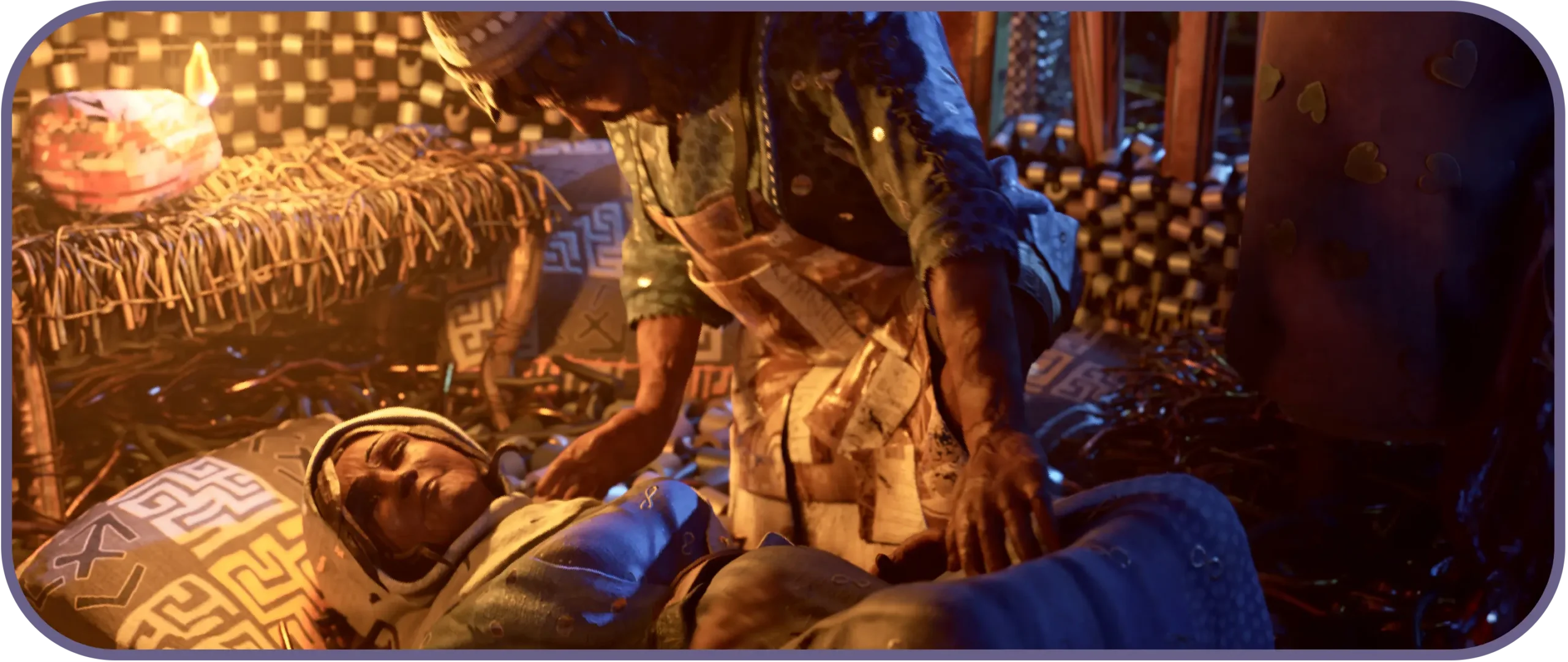
Yes, there is historical precedent for this kind of requirement.
People sometimes had to return to their place of origin or property.
Luke’s account is plausible, though debated.
The idea of traveling for a census is not invented. We have extra-biblical evidence that similar practices existed. A Roman Egyptian papyrus (P. Lond. 3.904) instructs people: return to their home areas for registration. This shows that movement for census purposes did happen.
In Roman taxation, location mattered. Especially for property tax, tied to land ownership. If Joseph had family land in Bethlehem, that could explain why he had to go there.
Jewish culture strengthens this possibility. Land and tribal identity were preserved across generations. Genealogies were taken seriously and recorded. Josephus confirms this practice.
However, scholars still debate Luke’s exact description. Some argue it may not reflect standard empire-wide policy.
The strongest conclusion is this: Luke’s scenario is historically plausible, even if not universally practiced everywhere.
There is extra-biblical historical precedent for people travelling to their own towns for taxation.
According to journalist Michael Hesemann, “In Roman times, there were two taxes, a head tax and a property tax,” and “The place of taxation was always the place where the property was so that the property tax could be assessed at the same time.”[577] As Theologians Andreas J. Köstenberger and Alexander Stewart note:
Parallels with Egyptian and Arabian census and property returns indicate that one could live away from one’s legal place of registration and would need to return there for either the census, a property return (if either Mary or Joseph owned or inherited property near Bethlehem), or both.[578]
A manuscript known as P. Lond. 3.904, a 2nd century papyrus manuscript from Alexandria Egypt,[579] provides this description of a Roman census:
It is necessary that all persons who are not resident at home for one reason or another at this time return to their homeplaces in order to undergo the usual registration formalities and to attend to the cultivation of the land which is their concern.[580]
Theologian Raymond E. Brown thinks that the practice described in P. Lond. 3.904 may only apply to migrant workers, and would not have applied to Joseph. However, Brown also acknowledges that
one cannot rule out the possibility that, since the Romans often adapted their administration to local circumstances, a census conducted in Judea would respect the strong attachment of Jews to tribal and ancestral relationships. . . Even if Luke had little historical information about how the census of Quirinius had been conducted, he lived in the Roman Empire and may have undergone census enrollment himself. It is dangerous to assume that he described a process of registration that would have been patently opposed to everything that he and his readers knew.[581]
Michael Hesemann draws attention to the discovery of
the private archive of a Jewish woman named Babatha carefully wrapped in linen, stowed in a leather pouch, and then untouched for 1800 years. One of the papyri she had so carefully stored was a certified copy of her tax declaration. It is dated December 2 to 4, 127, since even back then tax officers were not the fastest and needed two days to copy the document. In this year there was indeed a census by Emperor Hadrian, in the province of Arabia, where Babatha’s property was located. From her account, we learn that the woman had walked twenty-files miles from her home in Maoza to Rabbath-Moab, because that was the place of the tax office with jurisdiction over her.[582]
Erik Manning comments that
The phrase “his own city” (Luke 2:3) would refer to a person’s place of birth, legal residence, or recent home. The Greek (polis heautou) is used this way throughout Scripture (e.g., Josh. 20:6; 1 Sam. 8:22; Ezra 2:1; Neh. 7:6; Matt. 9:1). Most Jews still lived near their ancestral towns. Bethlehem may have been Joseph’s legal or family seat. The census travel wasn’t some crazy, empire-wide mass exile, it was normal administration.[583]
He also explains that
Jewish land laws weren’t like ours. Under Levitical law (Leviticus 25), land stayed in the family. Even centuries later, Jewish families preserved tribal land identity. Genealogies weren’t loose tradition, they were official records. Josephus even says they were stored and referenced (Against Apion 1.30). If Joseph’s family had land in Bethlehem, even if he was living in Galilee, that’s where Rome would have counted him.[584]
Michael Hesemann, Jesus of Nazareth: Archaeologists Retracing the Footsteps of Christ. Ignatius Press, 2021. Kindle edition, 64.
Andreas J. Köstenberger and Alexander Stewart, The First Days of Jesus: The Story of the Incarnation. Wheaton, IL: Crossway, 2015. [Kindle Android version], 143.
Michael J. Kruger, “How to Face Apparent Contradictions in the Gospels: Does the Census Account in Luke 2 Contain Errors?” https://www.thegospelcoalition.org/article/apparent-contradictions-gospels/.
Raymond E. Brown, The Birth of the Messiah: A Commentary on the Infancy Narratives in Matthew and Luke. Garden City, NY: Doubleday & Company, 1977, 549, quoted by https://thechristianthinker.com/bethlehem-the-birth-of-jesus-and-lukes-census/.
Michael Hesemann, Jesus of Nazareth: Archaeologists Retracing the Footsteps of Christ. Ignatius Press, 2021. Kindle edition, 65.
Erik Manning, “Did Luke Botch the Census? A Historical Look at Luke 2.” https://isjesusalive.com/did-luke-botch-the-census-a-historical-look-at-luke-2/.
Erik Manning, “Did Luke Botch the Census? A Historical Look at Luke 2.” https://isjesusalive.com/did-luke-botch-the-census-a-historical-look-at-luke-2/.
We don’t know.
The Bible never says Mary rode a donkey.
Walking is at least as likely, maybe more.
The image of Mary riding a donkey is traditional. But it is not found in the New Testament. Neither Matthew nor Luke mentions any animal. This detail likely comes from later tradition. Specifically from 2nd-century Christian writings.
Historically, both options are possible. The journey from Nazareth to Bethlehem was long. Roughly 90 miles using safer routes. Travel typically took about 7 to 10 days.
People walked 10–15 miles per day. Pregnant women could travel, but it was demanding. A donkey would make sense practically. But it would require access to one. Many people at the time simply walked. So walking is at least as plausible as riding.
The key point: the donkey is not historical data, but a later visual tradition that stuck.
The New Testament doesn’t actually say how Mary travelled to Bethlehem. She may have ridden on a donkey, but she probably just walked.
Most nativity stories depict Mary riding on a donkey, yet the Gospels make “no mention of Mary and Joseph having a donkey, and it is equally (if not more) plausible that they walked the entire way. The notion that Mary rode a donkey actually stems from a mid-second-century Christian tradition.”[585] Today, the journey from Nazareth to Bethlehem is about 70 miles. However,
in biblical times, travelers would avoid the direct route through Samaria due to its difficult terrain and unfriendly people, opting for a longer, 90-mile route. This route went through the Jezreel Valley, followed the Jordan River south, and then ascended through the Judean Desert to Jerusalem before finally reaching Bethlehem. . . . In biblical times, walking from Nazareth to Bethlehem took 7 to 10 days, depending on factors like terrain, weather, and travel pace. Travelers covered 10-15 miles daily on rough paths, with rest stops and Sabbath observance adding to the journey time.[586]
Andreas J. Köstenberger and Alexander Stewart, The First Days of Jesus: The Story of the Incarnation. Wheaton, IL: Crossway, 2015. [Kindle Android version], 140.
https://www.artzabox.com/a/answers/travelling/how-many-days-would-it-take-to-walk-from-nazareth-to-bethlehem?srsltid=AfmBOoo2Ej7sEJihUpp7Cu4z0FfF953hJ1K5o8JrodhCrpXhg9xz88T0.
Not necessarily.
Luke’s reference to Quirinius is debated, but not clearly an error.
There are several plausible historical explanations.
This is one of the most discussed historical questions in the Gospels.
The issue is this: Josephus records a census under Quirinius in AD 6. But Jesus’ birth is usually placed around 5–4 BC. So critics claim Luke made a mistake. However, several factors complicate that conclusion.
First, Luke clearly knows about the AD 6 census. He references it elsewhere (Acts 5:37). So he is likely distinguishing two events.
Second, Augustus initiated multiple censuses. These were not always simultaneous across the empire. Some took years, even decades, to complete regionally.
Third, the Greek wording allows flexibility. “Protos” can mean “before,” not only “first.” So Luke 2:2 could mean: “This census happened before Quirinius governed Syria.”
Fourth, Quirinius may have held authority in Syria earlier. Not necessarily as official governor, but in some capacity. Roman administration was often messy and overlapping.
Fifth, local adaptation is likely. Herod may have implemented a Roman-style census
adjusted to Jewish customs, including tribal ties.
The honest conclusion is this: There is tension in the data, but not enough to prove Luke is wrong. It remains historically plausible, though not fully resolved.
Luke’s reference to Quirinius in connection to the census that leads Joseph and Mary to Bethlehem is historically plausible.
Because the Jewish historian Josephus mentions a census in Syria under the leadership of Quirinius that sparked a tax revolt led by Judas of Galilee in 6 AD, “Critics are quick to claim that Luke’s reference to this census [at the time of Jesus’ birth around 5 BC] represents a historical error, but such hasty claims go beyond the historical evidence.”[587] Indeed, in Acts 5:37 Luke himself references “Judas the Galilean” who “rose up in the days of the census and drew away some of the people after him . . .” In other words, Luke was well aware of the AD 6 census, which he places in relation to other historical events of the first century, and which he thereby distinguishes from the earlier census mentioned in his Gospel’s nativity story.
The Roman Emperor Augustus describes ordering
multiple censuses in the Res Gestae Divi Augusti (section 8), stating: “I conducted three censuses alone . . . in which about 4,000,000 Roman citizens were registered.” The first of these began in 8 BC. Now, while these were primarily for Roman citizens, it shows that empire-wide census activity was already happening at the time Luke describes. And like most things Roman, the rollout would have been staggered, hitting different regions at different times.[588]
Theologian I. Howard Marshall notes one case in this period when a Roman census in Gaul took 40 years to complete![589] Given that Jesus was born in 5 BC, this could have been within two years of the census begun in 8 BC. This census would have been carried out in Syria under the leadership of Publius Quinctilius Varus, who governed the region from 7/6 BC to 4 BC. While the censuses mentioned in Res Gestae Divi Augusti seems to be focused on Roman citizens, Luke is probably not referring “to a single legal document issued by Augustus,” but rather to “a general policy established by Augustus to enroll the empire.”[590] As historian Paul L. Maier suggests:
Luke rather intends here a provincial census of noncitizens for purposes of taxation, and many records of such provincial registrations under Augustus have survived, including Gaul, Sicily, Cilicia, Cyrene, and Egypt. Among these were client kingdoms such as that of Herod the Great; for example, Archelaus (unrelated to Herod), client king of Cappadocia, instructed a subject tribe “to render in Roman fashion an account of their revenue and submit to tribute.”[591]
Theologians Andreas J. Köstenberger and Alexander Stewart note that
Augustus was very concerned with census taking, and his rule was marked by a great increase in census activity. This involved at least three censuses of Roman citizens in 28 BC, 8 BC, and AD 14, along with various censuses of all inhabitants (citizens and noncitizens) in the provinces. Since Judea was a client kingdom of Rome, Herod was responsible for collecting his own taxes and paying tribute to Rome. Nevertheless, Rome could still require censuses in client kingdoms.[592]
According to Köstenberger and Stewart,
Herod would certainly have employed some form of census and record keeping in order to facilitate accurate taxation. In fact, Josephus indicates that Herod had excellent records for this purpose, records that required some kind of census activity. Herod likely based such census activity on Roman precedent, modifying it to fit Jewish culture and expectations.[593]
Hence,
Herod may have modified a Roman-style census in an effort to avoid offending the Jewish population. He quite plausibly could have fulfilled the census requirement by allowing Jews to follow their tradition of associating with their tribe, which would explain why Mary and Joseph travelled to Bethlehem.[594]
Theologian N. T. Wright argues that the Greek preposition protos in Luke 2:2 can be translated “before” rather than “first,” making Luke 2:2 read: “This census took place before the time when Quirinius was governor of Syria.” As Köstenberger and Stewart comment:
Quirinius’s [AD 6] census and the resulting upheaval were so well known, if Luke was referring to a prior census, the translation of prōtos as “before” makes perfect sense. Luke also clearly knew that Jesus’s birth took place during the reign of Herod, so he could not have meant that Jesus was born during Quirinius’s census of AD 6. If he had, it would have made Jesus about twenty years old at the start of his ministry instead of “about thirty years of age,” as Luke claimed. These contextual historical factors support the translation of Luke’s reference as, “This was the registration before Quirinius governed Syria.”[595]
However, theologian Michael J. Kruger observes that
Justin Martyr . . . . writing in Rome in the middle of the second century, refers to this [nativity era] census under Quirinius, whom he calls the “procurator” (epitropos) in Judea. He even challenges his readers to check out the census archives for themselves (something one could’ve easily done, as census record-keeping was meticulous). Such a challenge would be risky if there were no such records. . . . Justin doesn’t call Quirinius a “governor” but a “procurator” (epitropos)—a different office entirely. (Another term often used to refer to a procurator is hegemon.) A procurator was a lower office, typically involved in administering and implementing a census. Curiously, Luke appears to confirm this fact. He doesn’t describe Quirinius with the typical Greek word for “governor” but instead uses the participle hegemoneuon (“to be a hegemon”).[596]
As Erik Manning observes:
Luke uses the Greek hēgemoneuontos (verb form of hēgemōn), which simply means “ruling” or “governing.” . . . . and can refer to either provincial governors or other officials with regional oversight. Luke’s usage fits someone like Quirinius, who likely exercised administrative authority in Syria before his formal appointment as legate in AD 6. Tacitus (Annals 3.48) mentions Quirinius as having served in Syria, showing he had a presence there even earlier.[597]
Archaeologist Bryan Windle confirms that
Luke does not say that Quirinius was the Governor . . . of Syria. Despite the way it is translated in our English versions of the Bible, in the original Greek, it says he was governing in Syria. Luke uses the verb ἡγεμονεύω (hēgemoneuō), which means Quirinius was exercising authority in some capacity, but does not necessarily mean he was holding the specific office of governor.[598]
In short, Luke 2:2 could be read as saying either that “This was the registration before Quirinius was governor of Syria,” or that “This was the first registration when Quirinius was governing of Syria.” Either way, Luke’s reference to Quirinius is consistent with what we know about his career from extra-biblical sources, as summarized by I. Howard Marshall:
After holding a military command against the Marmaridae (in N. Africa?), Publius Sulpicius Quirinius became consul in 12 BC. At some point during the next 12 years he subjugated the Homonadenses, a race of brigands on the south border of Galatia. He acted as guide and supervisor of the young prince Gaius Caesar in Armenia, AD 3–4, and he was legate of Syria, AD 6–9; he died in AD 21.[599]
So why did Luke mention Quirinius in relation to the nativity era census rather than Publius Quinctilius Varus, who was governor at the time? Kruger suggests “The answer is simple: Quirinius would later become governor in AD 6 and would implement a better-known census. Luke knew his audience would be familiar with this later census and wanted to distinguish it from the earlier one Joseph participated in.”[600]
Andreas J. Köstenberger and Alexander Stewart, The First Days of Jesus: The Story of the Incarnation. Wheaton, IL: Crossway, 2015. [Kindle Android version], 134.
Erik Manning, “Did Luke Botch the Census? A Historical Look at Luke 2.” https://isjesusalive.com/did-luke-botch-the-census-a-historical-look-at-luke-2/.
Jimmy Atkin, “The Enrollment of Jesus’ Birth.” https://jimmyakin.com/2022/03/the-enrollment-of-jesus-birth.html.
Jimmy Atkin, “The Enrollment of Jesus’ Birth.” https://jimmyakin.com/2022/03/the-enrollment-of-jesus-birth.html.
Paul L. Maier, “The Date of the Nativity and the Chronology of Jesus’ Life.” https://inchristus.com/wp-content/uploads/2010/12/maier-date-of-the-nativity.pdf.
Andreas J. Köstenberger and Alexander Stewart, The First Days of Jesus: The Story of the Incarnation. Wheaton, IL: Crossway, 2015. [Kindle Android version], 135.
Andreas J. Köstenberger and Alexander Stewart, The First Days of Jesus: The Story of the Incarnation. Wheaton, IL: Crossway, 2015. [Kindle Android version], 136.
Andreas J. Köstenberger and Alexander Stewart, The First Days of Jesus: The Story of the Incarnation. Wheaton, IL: Crossway, 2015. [Kindle Android version], 135.
Andreas J. Köstenberger and Alexander Stewart, The First Days of Jesus: The Story of the Incarnation. Wheaton, IL: Crossway, 2015. [Kindle Android version], 138.
Michael J. Kruger, “How to Face Apparent Contradictions in the Gospels: Does the Census Account in Luke 2 Contain Errors?” https://www.thegospelcoalition.org/article/apparent-contradictions-gospels/.
Bryan Windle, “Quirinius: An Archaeological Biography.” https://biblearchaeologyreport.com/2019/12/19/quirinius-an-archaeological-biography/.
I. Howard Marshall, The Gospel of Luke: A Commentary on the Greek Text, quote by Jimmy Atkin, “The Enrollment of Jesus’ Birth.” https://jimmyakin.com/2022/03/the-enrollment-of-jesus-birth.html.
Michael J. Kruger, “How to Face Apparent Contradictions in the Gospels: Does the Census Account in Luke 2 Contain Errors?” https://www.thegospelcoalition.org/article/apparent-contradictions-gospels/.
Micah prophesies that the Messiah will come from Bethlehem.
He will be a ruler in Israel.
And his origins are described as ancient or “from everlasting.”
Micah 5:2 is one of the clearest location-specific prophecies.
It names Bethlehem Ephrathah precisely.
This distinguishes it from other places called Bethlehem.
At the time, Bethlehem was a small, insignificant town.
That makes the prophecy counterintuitive.
The prophecy contains three key elements:
Place
The Messiah will come from Bethlehem in Judah.
Role
He will be a ruler in Israel.
This connects directly to the Davidic kingship.
Nature
His “origins are from of old, from everlasting.” This suggests something beyond an ordinary human king. In Jewish expectation, this pointed to a future Davidic ruler.
In the New Testament, Jesus is born in Bethlehem. This is presented as fulfillment of Micah’s prophecy. Theologically, it links:
David’s city
God’s promise of a king
A ruler with deeper, possibly eternal identity
So Micah 5:2 functions as both: a geographical marker and a theological claim.
In the eight century BC, the prophet Micha prophesied: “But you, Bethlehem Ephrathah, though you are little among the thousands of Judah, yet out of you shall come forth to Me the One to be ruler in Israel, whose goings forth have been from of old, from everlasting.” (Micha 5:2).
Gordon Franz explains that
Toward the end of the eighth century BC, the superpower Assyria was threatening the Kingdom of Judah. The prophet Micah prophesied,
But you, Bethlehem Ephrathah, though you are little among the thousands of Judah, yet out of you shall come forth to Me the One to be ruler in Israel, whose goings forth have been from of old, from everlasting (5:2).
There are three points in this prophecy that should be noted. First, Micah singles out the place where the Messiah would be born, Bethlehem in Judah. At this time in Israel, there were two other Bethlehems in the land of Israel. One was in Lower Galilee in the tribal territory of Zebulun (Josh. 19:15). The other was in the territory of Benjamin, just north of Jerusalem. It was near this Bethlehem that Rachel was buried (Neh. 7:26; Gen. 35:16,19; 48:7; I Sam. 10:2; Jer. 13:4-7; 18:23; Hareuveni 1991:64-71). Second, Micah describes God’s purpose for the Messiah. He shall be a ruler in Israel. There is a day coming when the Messiah, the Lord Jesus, shall sit on the throne of His father David and reign over the House of Jacob forever (Luke 1:32,33, cf. II Sam. 7:12-17; Ps. 110). Third, Micah describes the person of the Messiah. He was from of old, from everlasting. John begins his gospel with the eternality of the Lord Jesus (John 1:1-3,14).
The Lord Jesus was conceived in the virgin Mary by the Holy Spirit in Nazareth (Luke 1:35). In order for this prophecy to be fulfilled, Mary would have to go to Bethlehem. God, in His sovereignty, moved the heart of Caesar Augustus in Rome to declare a census in which all residents had to be enrolled in their own city [Luke 2:1-3]. Joseph, who was betrothed to Mary, had ancestral roots in Bethlehem. Micah's prophecy was marvelously fulfilled when Joseph returned with Mary to his ancestral home.[601]
Yes.
Bethlehem is well attested historically and archaeologically.
It was inhabited in the time of Jesus.
Bethlehem is not just a biblical idea. It is a historically attested location.
First, literary evidence. It appears in Egyptian records as “Bit-Lahmi” (14th century BC). This shows the town existed long before Jesus.
Second, biblical continuity. Bethlehem is known as David’s hometown.
Third, archaeology. Excavations around the Church of the Nativity
show habitation in the 1st century. This directly addresses earlier skepticism.
Fourth, inscriptions. A bulla (clay seal) from the 7th–8th century BC
mentions Bethlehem in Hebrew. This confirms it as an administrative location.
So the evidence spans centuries. From Bronze Age texts to Roman-era occupation. The only real debate historically was whether it was inhabited in Jesus’ time. Current archaeology supports that it was.
Conclusion: Bethlehem was a real, continuously known settlement and very likely inhabited in the 1st century.
Both literary and archaeological evidence show that Bethlehem was a real place in the first century.
Bethlehem is, of course, a real town today. It is home to the Church of the Nativity, built in the early 4th century, which marks the traditional site of Jesus’ birth.[602] The earliest extra-biblical mention of Bethlehem comes in a letter from the 14th century BC found at the archaeological site of Amarna in Egypt.[603] In this document a man named Abdi-Heba, the Egyptian governor of Jerusalem at the time, asks Pharaoh Amenhotep III to send him archers so that he could recapture “Bit-Lahmi.” This settlement was named after “Lahmo,” the Chaldean god of fertility, called by the Canaanites “Lahama,” a name that became transliterated in Hebrew as “Bethlehem.” Archaeologist Titus Kennedy comments that:
Many have. . . asserted that there is no archaeological evidence that Bethlehem was occupied in the 1st century BC and 1st century AD. . . . However, recent archaeological excavations in and around the Church of the Nativity have confirmed that the village was indeed occupied during. . . the time of Jesus.[604]
In May 2012, the Israel Antiquities Authority announced the discovery of a bulla (i.e., a small clay seal impression) bearing the name of Bethlehem and dated to the 7th or 8th century BC (see fig.). This was a “fiscal bulla” used to seal a tax shipment from Bethlehem to Jerusalem. As archeologist Eli Shukron commented:
Here we can read [the word Bethlehem] in a clear Hebrew inscription from the First Temple period on a bulla found in Israel that arrived from Bethlehem to Jerusalem maybe to pay some tax. This is the Bethlehem next to Jerusalem referred to in the Bible.[605]
Fig. Ancient Bethlehem Bulla (Armstrong Institute of Biblical Archaeology).[606]

Gustavo Milano, “The city of Bethlehem: history and archaeology.” https://www.omnesmag.com/en/resources-2/the-city-of-belen-history-and-archeology/#:~:text=According%20to%20Cabello%2C%20%22it%20seems,with%20the%20city%20of%20Bethlehem
Titus Kennedy, Excavating the Evidence for Jesus. Eugene, OR: Harvest House, 2022, 34.
“Israeli archaeologists find seal that mentions Bethlehem.” http://www.pcusa.org/news/2012/6/19/israeli-archaeologists-find-ancient-seal-mentions-/.
They are the Magi, eastern scholars or astrologer-priests.
Likely from Persia, Babylon, or Arabia.
They interpreted a celestial sign as the birth of a king.
“Star readers from Persia” is a modern way to describe the Magi. In Matthew 2:1 they are called “Magi from the east.”
The term magoi is broad. It can include priests, astrologers, scholars, or advisors. Historically, the Magi were associated with Persia. But similar roles existed in Babylon and Mesopotamia.
Babylon is especially plausible. It was a major center of astronomy. It also had a large Jewish population after the exile. So knowledge of Jewish prophecies could be present. For example, Numbers 24:17 speaks of a rising “star.”
The Magi likely interpreted celestial events symbolically. Possible triggers include:
A planetary conjunction (Jupiter and Saturn, 7 BC)
A nova or supernova (5–4 BC)
In ancient astrology, such events signaled royal births.
Their journey fits historical patterns. Eastern dignitaries sometimes traveled to honor rulers. Politically, this would alarm Herod. Magi had influence in royal succession in Persia.
So they were not random travelers. They were elite, educated figures responding to a perceived cosmic sign.
The “the star readers from Persia” are “Magi” (sometimes written “Magoi”) or “wise men” from the east.
The “the star readers from Persia” are “Magi” or “wise men” from the east. Although it is a traditional Christmas image, Matthew doesn’t actually mention that the “wise men” rode on camels, and they may well have travelled on horse-back. And although it is traditional Christmas imagery, Matthew also doesn’t say that there were three wise men (the idea that there were three comes from the three gifts Matthew says they gave), though there may have been. In the third episode of this season these wise men are called “the star readers from Persia.” In the fourth episode they are called “wise men.” In Matthew’s Gospel, they are called “. . . Magi from the east . . .” (Matthew 2:1.) Theologians A. J. Köstenberger and A. Stewart note that “depending on the context, the magoi could represent wise men, priests, interpreters of dreams, astrologers, or sorcerers.”[607] From the fourth century B.C., Babylon was a center of astronomy, and “Magi” were important members of the Babylonian royal court in Mesopotamia. Babylon had contained a thriving Jewish colony since the time of the Jewish Exile, so Jewish prophecies of a Jewish saviour-king, the Messiah (e.g., Numbers 24:17), could well have been known to the Magi. Roger Highfield reports that “In the Hellenistic age (i.e., 322-20 BC) some of the Magi left Babylon for neighboring countries, and by the time of Christ, they lived mainly in Persia, Mesopotamia and Arabia . . .”[608] Matthew’s phrase about the Magi being “From the east” thus indicates
a homeland in either Persia, Babylon, or Arabia, most likely Babylon because the Babylonians had a great interest in astrology and a large Jewish community lived there as a result of the exile. However, the nature of the gifts—gold, frankincense, and myrrh—seems to indicate Arabia, while some have suggested Persia because the term magoi was originally associated with the Medes and Persians.[609]
In any case, the association between Magi, astronomy and a cultural familiarity with the Jews makes sense of the Magi’s presence in the nativity story in light of the famous “Star of Bethlehem.” Some think that Christmas “star” was a comet. We know from the records of Chinese and Korean astronomers that there was probably either a nova or supernova for some seventy days in March-May of either 5 or 4 BC, as recorded in “the Chinese book Ch’ien-han-shu and the Korean chronicle Samguk Sagi”[610] Moreover, the appearance of this nova followed a triple conjunction of Jupiter and Saturn took place in 7 BC during May/June, September/October, and December, in the zodiacal constellation of Pisces:
Pisces is a constellation sometimes associated with the last days and with the Hebrews, while Jupiter . . . was associated with the world ruler and Saturn was identified as the star of the Amorites of the Syria-Palestine region. The claim has been made that this conjunction might lead Parthian astrologers to predict that there would appear in Palestine among the Hebrews a world ruler of the last days. These astronomical events would certainly have led Eastern astrologers to the conclusion that something unusual was happening in the world.[611]
The conjunction of Jupiter and Saturn in 7 BC may well have primed the Magi to interpret a comet or nova as indicating the birth of a new king of the Jews. Moreover, as Köstenberger and Stewart observe: “the magoi may have been familiar with the prophecy from Balaam that ‘a star shall come out of Jacob, and a scepter shall rise out of Israel.’ [Numbers 24:17.] If so, they may have naturally connected this prophecy with the unusual astronomical phenomena they were observing.”[612]
That a delegation of Magi would travel to Jerusalem to worship (i.e., pay homage to) a new king is plausible in light of the fact that when the Zoroastrian king Tiridates of Armenia visited Rome in 66 AD, his entourage included men that Pliny the Elder said were Magi.[613] King Tiridates came to Rome to “worship” Nero “in the same way as Matthew’s Magi came to worship the newborn Messiah of the Jews.”[614]
The Magi’s role in the politics of the day explains why Herod would have been on edge at their appearance in Jerusalem. Ralph O. Muncaster recounts that:
During the years preceding the birth of Jesus , thee were numerous struggles between Rome and Persia. Palestine was essentially a “buffer state.” Herod was grated the title “king of the Jew” three full years before he was able to occupy his own capital city (he had previously been driven out by the Persians). Hence, Herod (a half Jew) was extremely insecure in his role. Furthermore, “full” Jews looked down on Herod. So the potential existed for Herod to be attacked from many directions, including through potential collusion between the Jews and Persians.
Add to this the fact that the ruler of Persia was aging and in ill health. The magi were given great power on Persia and often played key roles in governmental affairs. Their duties included selecting the kings of Persia. Hence, circumstances were in place that would certainly have “greatly troubled” the insecure Herod and the people of Jerusalem when the magi arrived (Matthew 2:3).[615]
Fig. “The Three Magi, Byzantine mosaic, c. 565, Basilica of Sant'Apollinare Nuovo, Ravenna, Italy (restored during the 19th century). As here, Byzantine art usually depicts the Magi in Persian clothing, which includes breeches, capes, and Phrygian caps.” [616]

Andreas J. Köstenberger and Alexander Stewart, The First Days of Jesus: The Story of the Incarnation. Wheaton, IL: Crossway, 2015. [Kindle Android version], 66.
Roger Highfield, Can Reindeer Fly? The Science of Christmas. London: Metro, 1998, 15.
Andreas J. Köstenberger and Alexander Stewart, The First Days of Jesus: The Story of the Incarnation. Wheaton, IL: Crossway, 2015. [Kindle Android version], 66.
Michael Hesemann, Jesus of Nazareth: Archaeologists Retracing the Footsteps of Christ. Ignatius Press, 2021. Kindle edition, 78.
Andreas J. Köstenberger and Alexander Stewart, The First Days of Jesus: The Story of the Incarnation. Wheaton, IL: Crossway, 2015. [Kindle Android version], 67.
Andreas J. Köstenberger and Alexander Stewart, The First Days of Jesus: The Story of the Incarnation. Wheaton, IL: Crossway, 2015. [Kindle Android version], 68.
See Pliny the Elder, Natural History 30:6, 16-17.
Geza Vermes, The Nativity: History and Legend. London: Penguin, 112.
Ralph O. Muncaster, Examine the Evidence: Birth of Christ: What Really Happened Christmas Morning? Eugene OR: Harvest House, 2000, 34.
David Armitage. “Was Luke wrong about the census?” https://tyndalehouse.com/2022/12/21/was-luke-wrong-about-the-census/
Andrew D. Edwards, “The Gospel of Luke and the Quirinius' Governorship.” https://www.christianpublishers.org/post/the-gospel-of-luke-and-the-quirinius-governorship
Bryan Windle. “O Little Town of Bethlehem.” https://biblearchaeologyreport.com/2021/12/10/o-little-town-of-bethlehem-2/#:~:text=The%20biblical%20text%2C%20written%20tradition,the%20Church%20of%20the%20Nativity
Bryan Windle. “Quirinius: An Archaeological Biography.” https://biblearchaeologyreport.com/2019/12/19/quirinius-an-archaeological-biography/
Mark Kidger. The Star of Bethlehem: An Astronomer’s View. New Jersey: Princeton University Press, 1999.
Andreas J. Köstenberger and Alexander Stewart. The First Days of Jesus: The Story of the Incarnation. Wheaton, IL: Crossway, 2015.
Michel R. Molnar. The Star of Bethlehem: The Legacy of the Magi. New Brunswick: Rutgers University Press, 2000.
Colin R. Nicholl. The Great Christ Comet: Revealing the True Star of Bethlehem. Wheaton, IL: Crossway, 2015.










.jpg)